
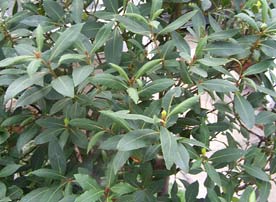
Bay leaves (Laurus nobilis) are the dried leaves of the Mediterranean bay laurel tree — an aromatic evergreen cultivated since antiquity. They are one of the most widely used herbs in European, Middle Eastern, and North American cooking, lending a subtle, complex background note that’s difficult to identify but immediately missed when omitted.
Flavor Profile
Bay leaves are aromatic rather than strongly flavored — their contribution to a dish is more of a rounded, herbal depth than a distinct taste. Fresh bay has a floral, slightly eucalyptus quality; dried bay is more mellow and tea-like, with gentle notes of clove and pine. The volatile oils release slowly during long cooking.
Turkish vs. California Bay
Turkish bay leaves (Laurus nobilis) — the true culinary bay. Mild, balanced, and aromatic. These are what you want.
California bay leaves (Umbellularia californica) — a completely different plant, significantly more pungent and camphor-like. Much stronger — use half as much or they can overpower a dish.
How to Use Bay Leaves
Bay leaves are almost always used whole and removed before serving — they remain tough and indigestible even after long cooking.
- Add to stocks, broths, and soups at the start of cooking
- Tuck into braises — pot roast, osso buco, lamb shanks
- Essential in French bouquet garni (bay, thyme, parsley stems)
- Add to pickling brines and spiced vinegars
- Include in pasta water, rice cooking water, and béchamel
Storage
Dried bay leaves keep for 1–2 years in an airtight container. They lose potency gradually — if you can barely smell a leaf when you crush it, it’s time for a fresh supply.