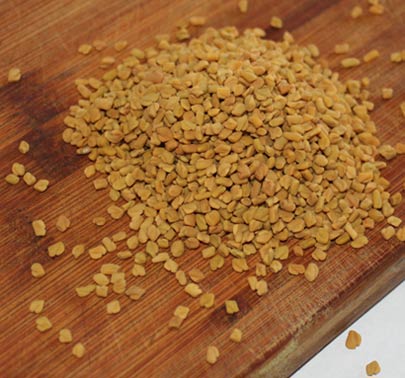

Fenugreek (Trigonella foenum-graecum) is a plant whose seeds are one of the most ancient and important spices in the world, used in Indian, Ethiopian, Egyptian, and Middle Eastern cooking for thousands of years. The small, hard, golden-amber seeds have a distinctive aroma — warm, slightly bitter, and unmistakably reminiscent of maple syrup (the synthetic maple flavoring used in many products is actually derived from fenugreek).
Flavor Profile
Raw fenugreek seeds are intensely bitter — they should almost never be eaten raw or used in large quantities without cooking. Toasting them briefly transforms the flavor dramatically, reducing bitterness and bringing out nutty, caramel-like, and maple notes. The flavor is complex and distinctive: there is nothing quite like it in the spice rack.
How to Use
Always toast first. Dry-roast in a skillet over medium heat for 1–2 minutes until just golden, stirring constantly. This dramatically reduces bitterness and develops the characteristic maple-like aroma. Use ground or whole after toasting.
In small quantities — fenugreek is potent. Most recipes call for ½ teaspoon or less.
Essential Uses
- Curry powder — fenugreek is a key component of most commercial and homemade curry powder blends
- Ethiopian berbere — the complex spice blend central to Ethiopian cuisine
- Panch phoron — the Bengali five-spice blend (fenugreek, nigella, cumin, mustard, fennel)
- Indian pickles (achaar) — both seeds and leaves are used in traditional Indian pickled vegetables
- Fake maple syrup — the synthetic maple flavoring in many commercial products uses sotolon, a compound found in fenugreek