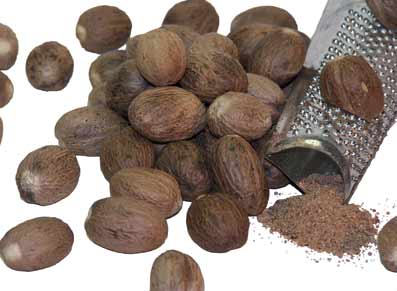

Nutmeg is the seed kernel of Myristica fragrans, a tropical tree native to the Banda Islands of Indonesia (the Spice Islands). From this same fruit comes both nutmeg (the seed) and mace (the lacy red aril surrounding it). Nutmeg was so valuable in the 17th century that the Dutch traded the entire island of Manhattan to the English in exchange for Run Island, then the world’s primary nutmeg source.
Flavor Profile
Warm, sweet, woody, and lightly spiced with notes of pine and clove. Ground nutmeg is stronger and more pungent than its aroma suggests — a little goes a very long way. Fresh-grated nutmeg is dramatically more aromatic than pre-ground, which loses its volatile oils within weeks of grinding.
Always Grate Fresh
The difference between freshly grated nutmeg and the pre-ground powder in a tin is substantial. Whole nutmeg nuts keep for years; invest in a small dedicated nutmeg grater or use a Microplane. You’ll use a fraction of a nut for most recipes.
Culinary Uses
Savory:
- Béchamel sauce — nutmeg is the classical French seasoning for white sauce; non-negotiable in lasagna, moussaka, and croquettes
- Mashed potatoes — a pinch of fresh nutmeg transforms them
- Spinach dishes — creamed spinach, spanakopita
- Pasta fillings — ricotta and spinach filling for ravioli traditionally includes nutmeg
Sweet:
- Eggnog — fresh-grated nutmeg on top is essential
- Pumpkin pie and spice blends — pumpkin pie spice contains nutmeg
- Rice pudding, custard, and crème brûlée — classic warming addition
- Dutch speculaas cookies and holiday baking
Note on Quantity
Use nutmeg sparingly — ¼ to ½ teaspoon is typical for a dish serving 4–6. In very large quantities nutmeg contains myristicin, which can be toxic.