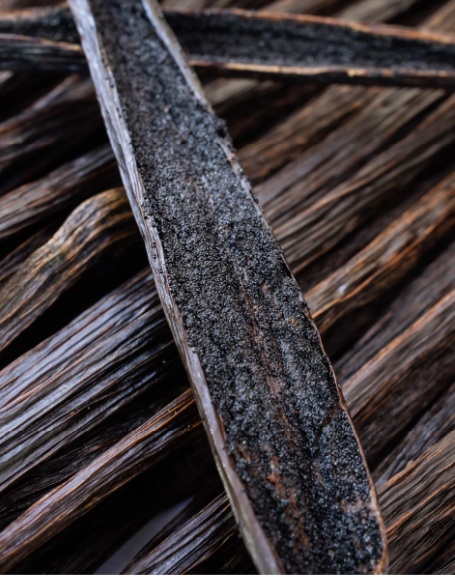
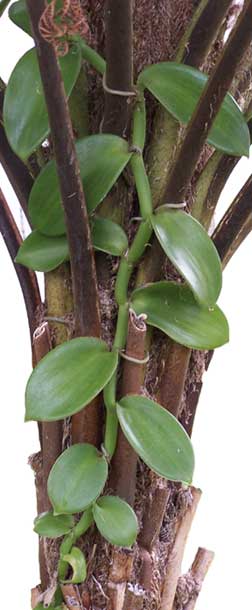
Vanilla (Vanilla planifolia) is the only edible fruit of the orchid family, native to Mexico and cultivated in tropical regions worldwide. The long, slender pods (beans) are harvested unripe and then cured through a months-long process of sweating and drying that develops the characteristic deep, complex, floral-sweet flavor. It is the world’s second most expensive spice after saffron — hand-pollination of each individual flower and the lengthy curing process make production inherently labor-intensive.
Flavor Profile
Rich, sweet, and complex: the primary flavor compound is vanillin, but genuine vanilla contains over 200 additional flavor compounds that make real vanilla profoundly more complex than synthetic vanillin. Floral, creamy, and warming, with hints of rum, tobacco, and caramel in fully cured beans.
Vanilla Origins
Madagascar (Bourbon) vanilla — the most widely available and most familiar; rich, creamy, classic vanilla flavor. Produced on Madagascar and the nearby island of Réunion (formerly called Bourbon).
Tahitian vanilla (Vanilla tahitensis) — floral and fruity with cherry and anise notes. More aromatic and less intensely “vanilla” than Madagascar. Preferred by some pastry chefs.
Mexican vanilla — earthy, spicy, and complex. The original; vanilla is native to Mexico.
How to Use Vanilla Beans
Split the bean lengthwise with a sharp knife. Scrape out the tiny seeds (the specks in premium ice cream and custard) with the back of the knife. Use both seeds and pod:
- Add the pod to heating milk or cream for custard, pastry cream, and ice cream base
- Steep the pod in simple syrup, rum, or vodka
- Don’t discard used pods — rinse, dry, and bury in sugar to make vanilla sugar
Making Vanilla Extract
Fill a jar with split vanilla beans (roughly 5 beans per cup). Cover completely with vodka or rum. Seal and store in a cool, dark place for at least 8 weeks, shaking occasionally. The longer it steeps, the richer the extract.